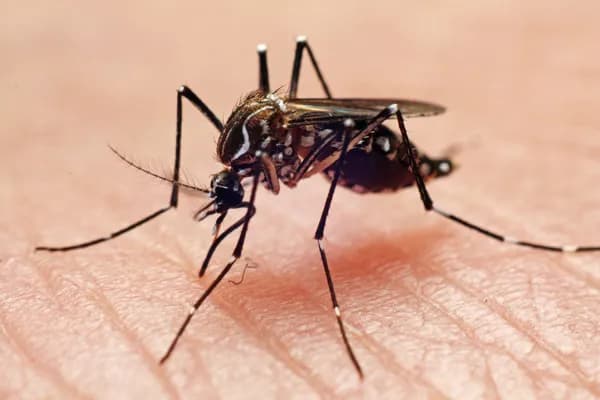
Google Wants to Release 32 Million Mosquitoes in California and Florida. The company is asking the U.S. Environmental Protection Agency for permission to release millions of sterilized mosquitoes in order to fight their disease-spreading counterparts. An Aedes aegypti mosquito Joao Paulo Burini via Getty Images Through its parent company, Alphabet, Google wants federal approval to release up to 32 million mosquitoes in California and Florida. That might sound apocalyptic, but the request is part of the tech giant’s Debug program to eliminate disease-carrying mosquitoes. Mosquitoes are the world’s deadliest animal. They spread malaria, dengue fever, West Nile virus and other fatal diseases to millions of people each year. The Debug project wants to tackle this issue by releasing male mosquitoes—which don’t bite or carry disease—to stop these “bad mosquitoes,” like Aedes aegypti.
The “good” bugs will be infected with a naturally occurring bacteria called Wolbachia, which will make them sterile. When one of these males tries to mate with a “bad” female, the eggs won’t hatch. “Over time, there will be fewer and fewer bad mosquitoes,” per the program’s website. Mosquitoes are the world’s deadliest animal. They spread malaria, dengue fever, West Nile virus and other fatal diseases to millions of people each year. The Debug project wants to tackle this issue by releasing male mosquitoes—which don’t bite or carry disease—to stop these “bad mosquitoes,” like Aedes aegypti.
The “good” bugs will be infected with a naturally occurring bacteria called Wolbachia, which will make them sterile. When one of these males tries to mate with a “bad” female, the eggs won’t hatch. “Over time, there will be fewer and fewer bad mosquitoes,” per the program’s website. This approach isn’t unique—it’s a known method called the sterile insect technique, and has been used in the United States for more than 60 years. According to the International Atomic Energy Agency, it’s an environmentally friendly insect pest control method that has been successful in controlling pests like fruit flies, screwworms and moths.
“It’s really a genius technique that has been used to completely eradicate or reduce numbers of serious pests and vectors,” says Chris Grinter, an entomologist at the California Academy of Sciences, to Matthew Brown at SFGate. It’s also not Debug’s first attempt at this. Verily, the subsidiary behind the project, released millions of sterilized males in California in 2017. The project is also seeing success in Singapore, where it has supported the National Environment Agency’s Project Wolbachia since 2018. In a May 2026 blog post, Debug says Project Wolbachia has “achieved 80-90 percent suppression” of the Aedes aegypti mosquito population and “more than 70 percent reduction in dengue incidents after 6 to 12 months of releases.