Ghana's HIV Estimates for 2026: A Comprehensive Overview
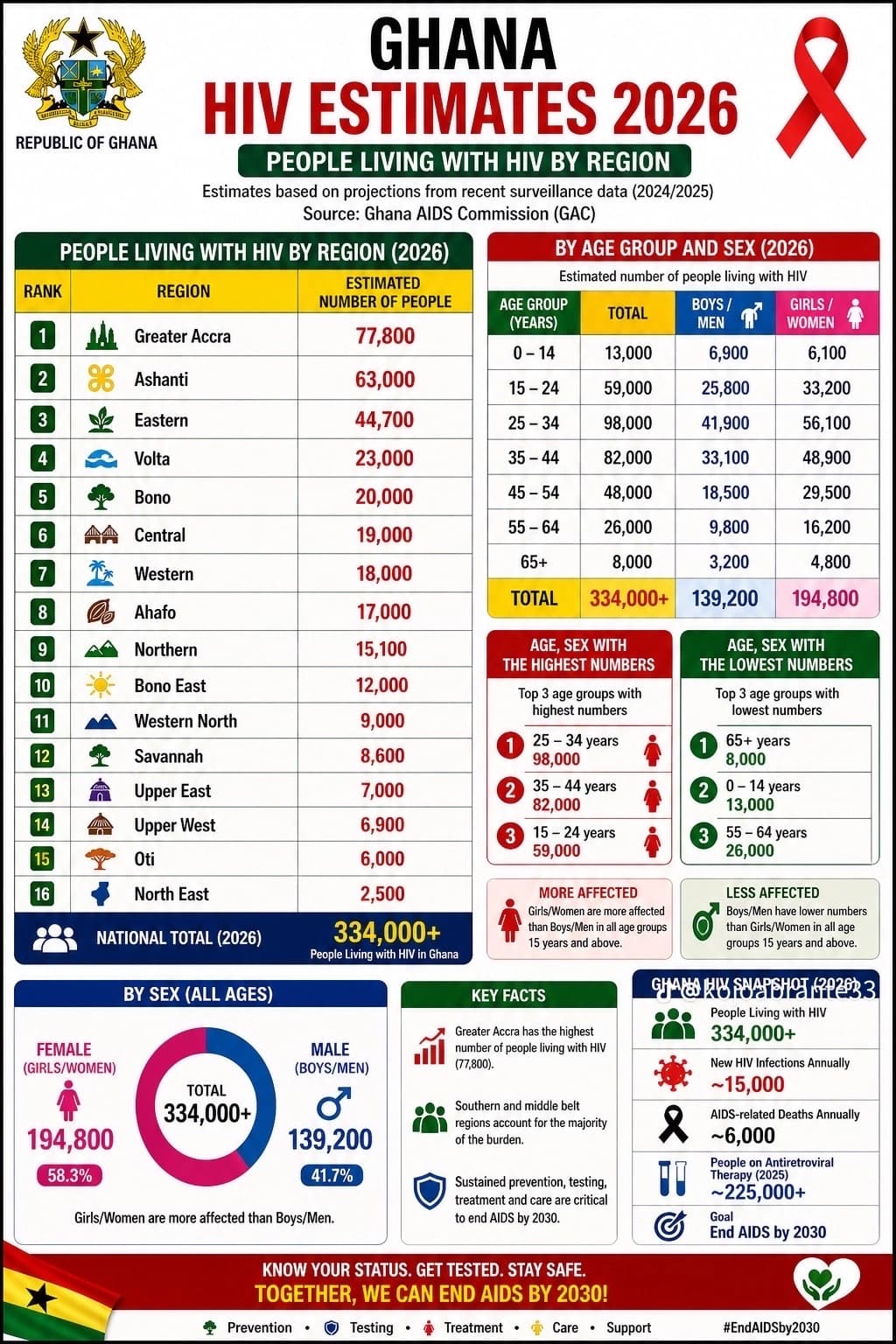
Ghana is at a crucial juncture in its fight against HIV/AIDS, with new estimates for 2026 providing significant insights into the status of the epidemic across various regions of the country. According to data from the Ghana AIDS Commission, as of 2026, approximately **334,000** people are living with HIV in Ghana, with notable variances across different regions and age groups.
Regional Breakdown of HIV Estimates
1. Greater Accra: The capital region stands out with the largest number of cases, estimated at 77,600 individuals. 2. Ashanti : Following closely, the Ashanti region accounts for 63,000 people living with HIV. 3. Western: Not far behind, the Western region has an estimated 54,000 people affected. 4. Volta, Eastern, Central, and Northern Regions: Each has its share, with figures ranging from 28,000 in the Eastern region to 18,000 in the Northern region. 5. **Upper West and Upper East: These regions have fewer cases, with estimates of 11,000 and 9,000, respectively.
Age Group Distribution
The distribution of HIV across age groups highlights the varying impact of the virus on different populations:
- The age group of **15-24 years** is particularly affected, with **34,000** individuals living with HIV. This statistic underscores the importance of HIV education and prevention efforts among the youth. - The **25-34 age group** has the highest number, with **90,000** affected. - Additionally, those aged 35-44 and 45-54 account for **52,000** and **34,000**, respectively. - Interestingly, the elderly population (55+) reflects a lower incidence, with just **16,000** cases.
Gender Disparities
The gender distribution of the affected population adds another layer to this narrative: - There are 194,800 females living with HIV, which is significantly higher than the 139,200** males. This discrepancy points to a need for gender-sensitive approaches to HIV prevention and treatment.
National Goals and Future Initiatives
The government and health organizations are urging the public to get tested and know their HIV status, especially in light of the goal to **end AIDS by 2030**. With nearly half of the affected population being unaware of their status, increasing awareness, access to testing, and antiretroviral therapy (ART) is paramount.
Conclusion HIV Estimates for 2026 in Ghana reveal a complex landscape of the epidemic, characterized by significant regional and demographic variances. Efforts must be scaled up to address the alarming figures, especially among the youth and women. Through education, testing, and treatment, Ghana can make strides toward decreasing the prevalence of HIV and ultimately achieving its goal of ending the epidemic by the year 2030. Together, with a concerted approach involving stakeholders from all sectors, Ghana can foster a future free from the burdens of HIV/AIDS. Call to Action
In light of these findings, it is a crucial time for individuals, communities, and organizations to unite for prevention efforts. Together, tackling stigma, improving healthcare access, and ensuring comprehensive sexual education can lead to transformative changes in lives across Ghana.